


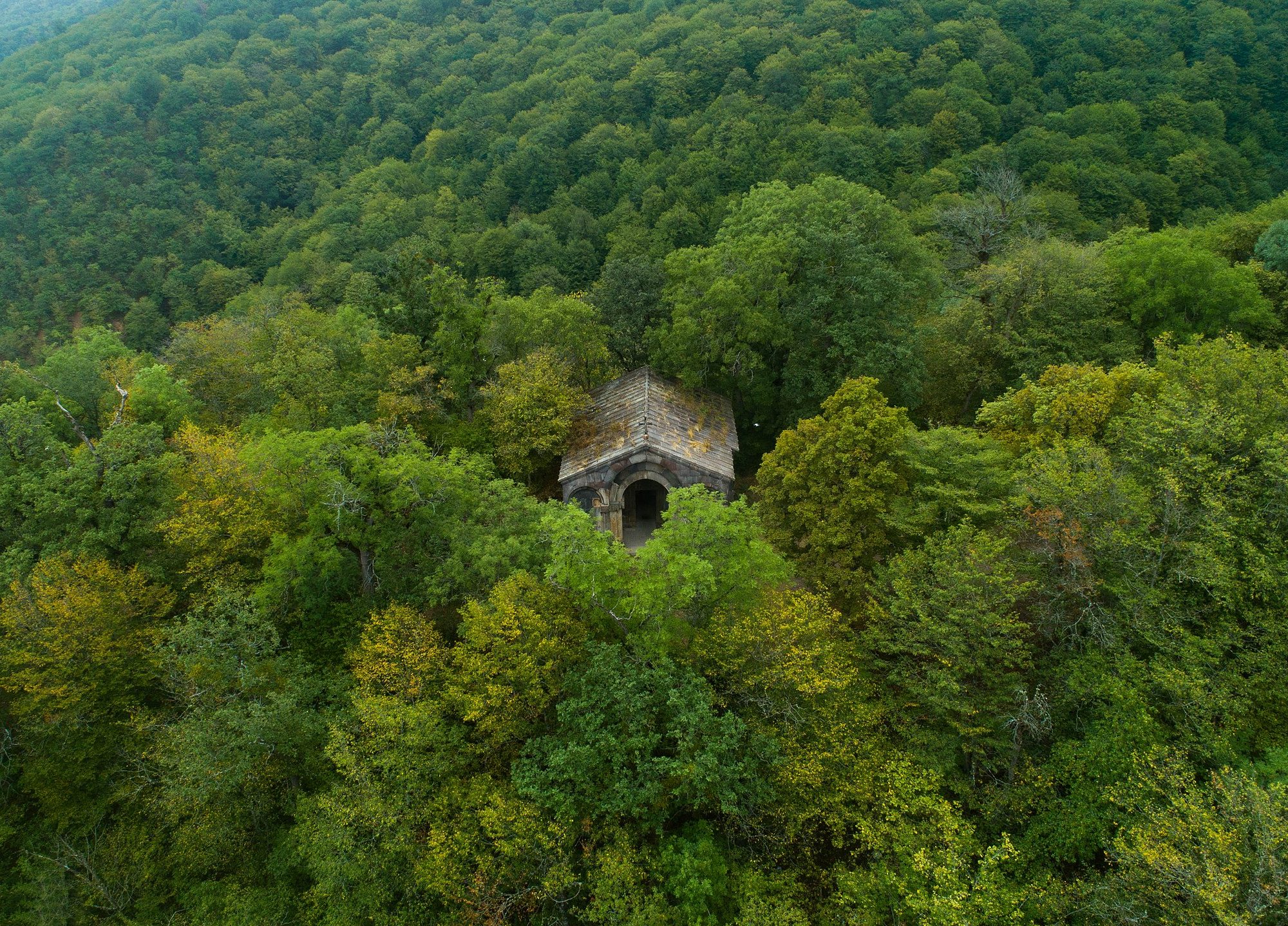
Bgheno-Noravank (Armenian: Բղենո-Նորավանք) is an 11th-century Armenian monastery in the Syunik Province of Armenia.
📍 Location: It is located about 3 km east of Bardzravan village, on a triangular promontory to the left of the road to Shurnukh, surrounded by wooded gorges near the Vorotan River.
⛪ Architecture: The monastery today mainly consists of a small church built in 1062 in traditional Armenian architectural style.
The church is ornately decorated with carved borders and biblical reliefs.
📜 History: Bgheno-Noravank began to exist in the 10th century and served as a religious and cultural center with ties to the production and illumination of manuscripts.
The church was rebuilt and completed in 1062, and the complex featured notable carved decoration inspired by biblical scenes.
🔍 Appearance: The church originally had a distinctive entrance with decorative stone carvings and stood harmoniously within the natural landscape.
Today, the main walls and ruins remain, showcasing the charm of medieval Armenian religious architecture.
📖 Rediscovery: The ruins of the monastery were rediscovered in the 1920s by the famous Armenian writer Axel Bakunts while traveling in the region.
🌟 Summary: Bgheno-Noravank is a small but unique medieval Armenian architectural and cultural monument, deeply connected to the religious life, history, and art of the region.